
Vision Pro App and Web Experience
Role: UX Researcher, UX Designer
Industry: Consumer Product
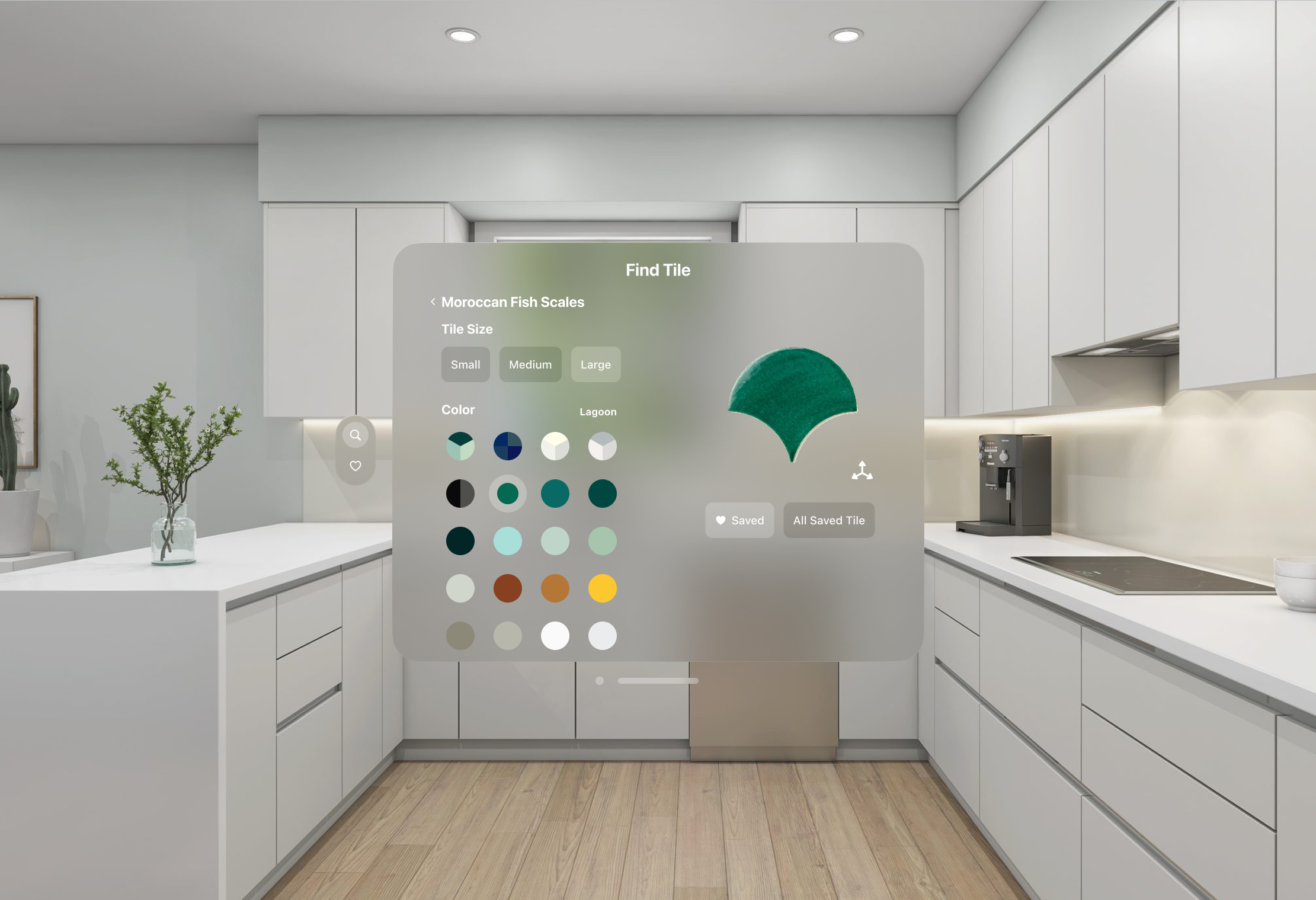
Summary: When our CEO asked the team to identify work that could benefit from AR/VR, I chose Mercury Mosaics — a luxury handmade tile company whose product practically demands to be seen in person. I designed a concept Vision Pro app that let users place tile in their own space and virtually examine individual pieces up close, working solo through Apple's spatial design system from scratch. While production costs ruled out a live launch, the project sharpened my component-driven design skills and put a real concept behind Rocket55's interest in emerging technology.
Situation
A product you have to see in person.
Mercury Mosaics makes luxury handmade tile. Every piece is a little different, and photos don't really convey what makes them worth buying. I visited their production floor during the project and seeing the tile in person made it obvious: the hardest part of selling this product online is that you can't replicate the experience of actually seeing it.
When our CEO asked the team to identify work that could genuinely benefit from AR/VR, Mercury Mosaics was the first client I thought of. It wasn't a stretch to see the use case.
Task
Explore a platform none of us had designed for.
This was a self-initiated concept exploration of Apple Vision Pro, with two goals: design something that solved a real problem for Mercury Mosaics customers, and build my own fluency in a platform with its own design system and spatial interaction patterns.
Learn the platform, then design for it.
Action
I dug into Apple's Vision Pro design system and component library in Figma, learning the spatial UI conventions and what makes an experience feel native to the platform rather than just adapted from a screen.
The concept let users pick a tile shape and color and see it placed on a wall or surface in their own space. They could also virtually hold a single tile up close to examine the texture and craftsmanship. That detail mattered — it was specifically designed to replicate the moment on the production floor that made the product click for me.
Result
A concept built to show what's possible.
Production costs ruled out a live launch, but that wasn't really the point. The project showed that I and Rocket55 are paying attention to where things are going, not just executing on proven approaches.
It was also genuinely fun to work on. Designing within a mature spatial design system at this level sharpened how I think about component-driven design work, and that's carried into projects since.
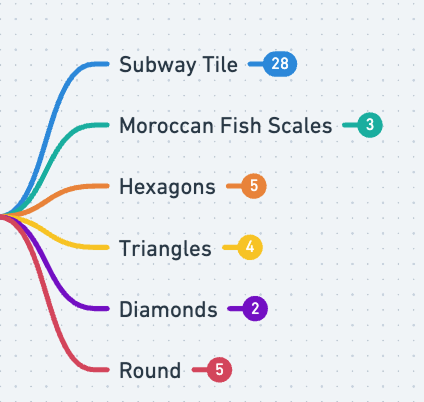
Sample user flow